
The Geometry of Gdańsk
Finding patterns, reflections and structure inside a historic city.
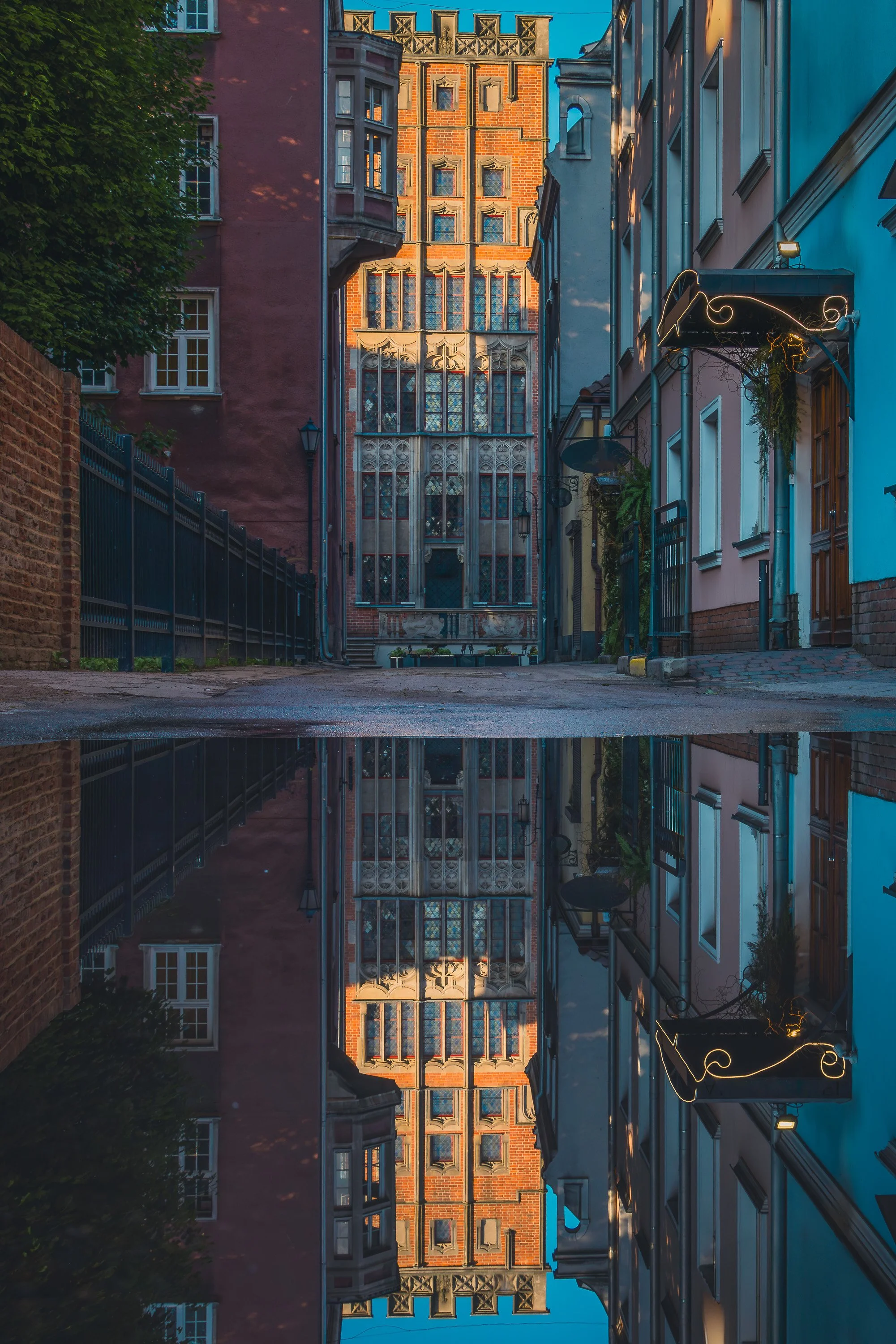
Historic cities make it very easy to photograph buildings. They make it slightly harder to stop photographing buildings and start looking at what those buildings are actually doing inside the frame.
Gdańsk is full of color, decoration and architectural detail. But after a while, I found myself paying less attention to individual buildings and more to the relationships between them. A row of windows becomes a pattern. Two rooflines create a shape. A reflection turns a facade upside down. A narrow opening between buildings becomes more interesting than either building on its own.
At some point, I stopped thinking quite so much about Gdańsk. I started thinking about geometry.
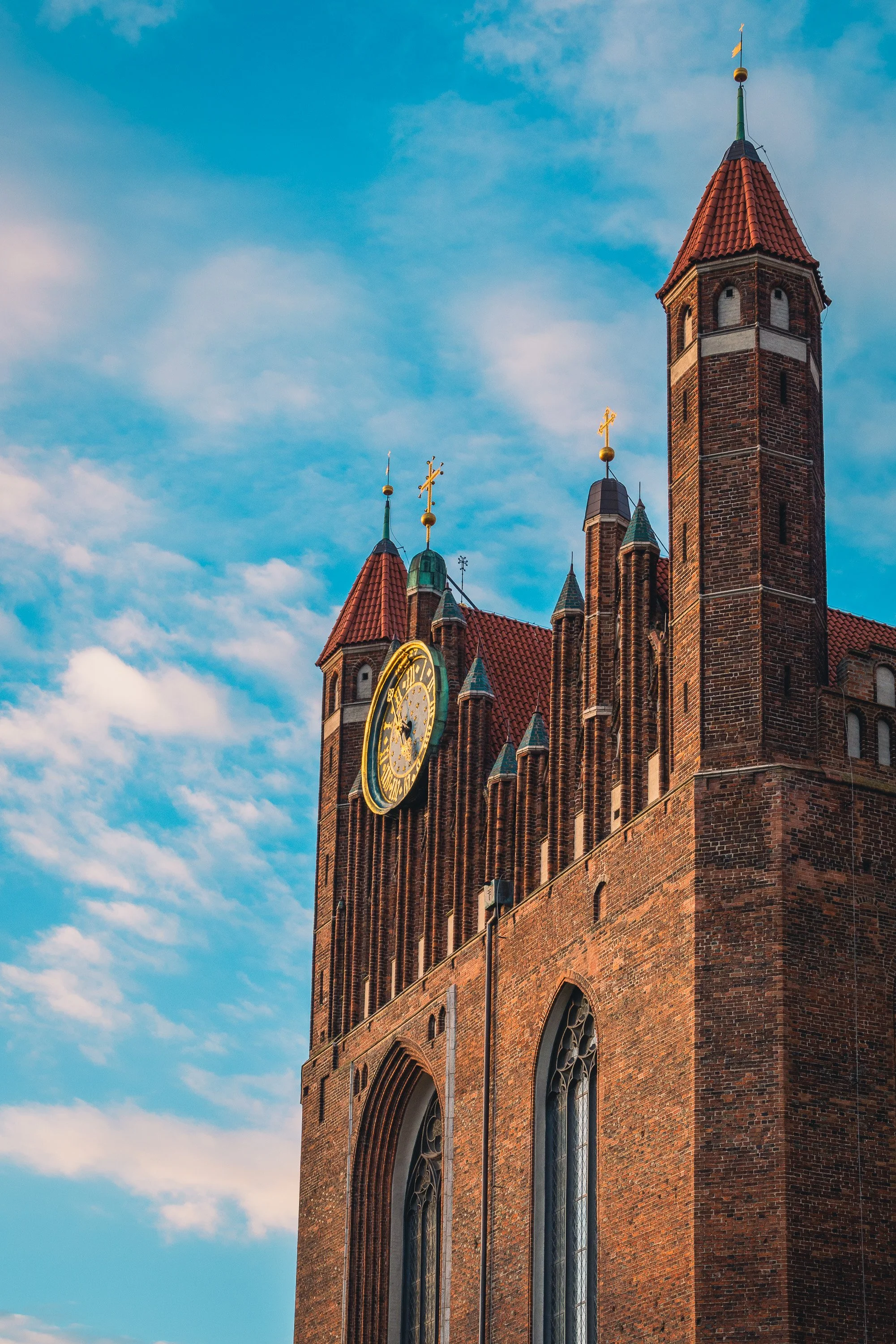
Vertical Rhythm
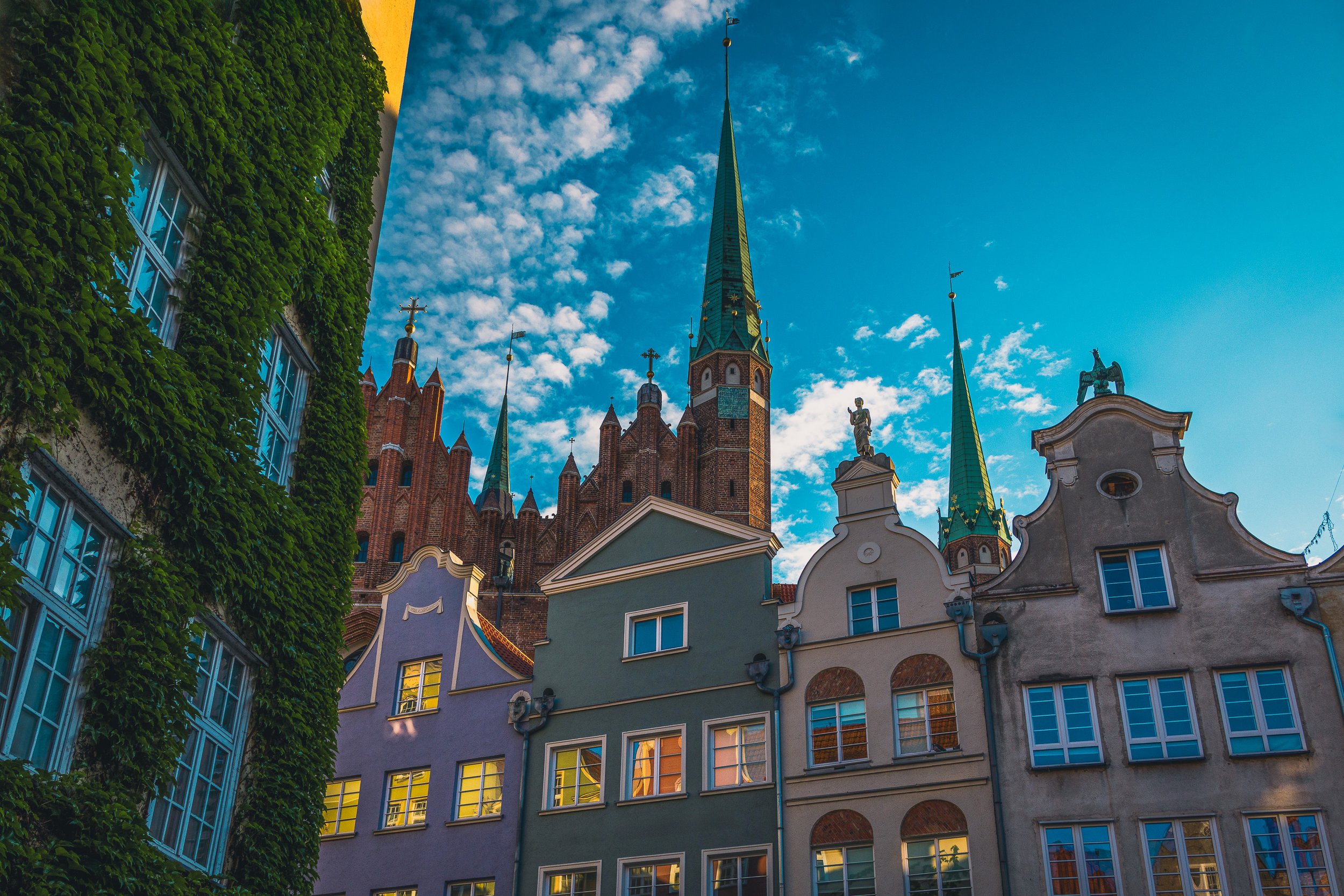
One of the easiest ways to change the way a city looks is simply to stop looking straight ahead.
Historic architecture is full of vertical lines. Towers, narrow facades, windows and brickwork all pull the eye upwards, and once I start noticing that rhythm, the building itself becomes almost secondary.
I am no longer asking whether I have photographed the entire church or tower.
I am asking whether the proportions work inside the frame.
That usually means leaving quite a lot out, which is useful because historic cities are not exactly famous for visual restraint.
Patterns in the Facade
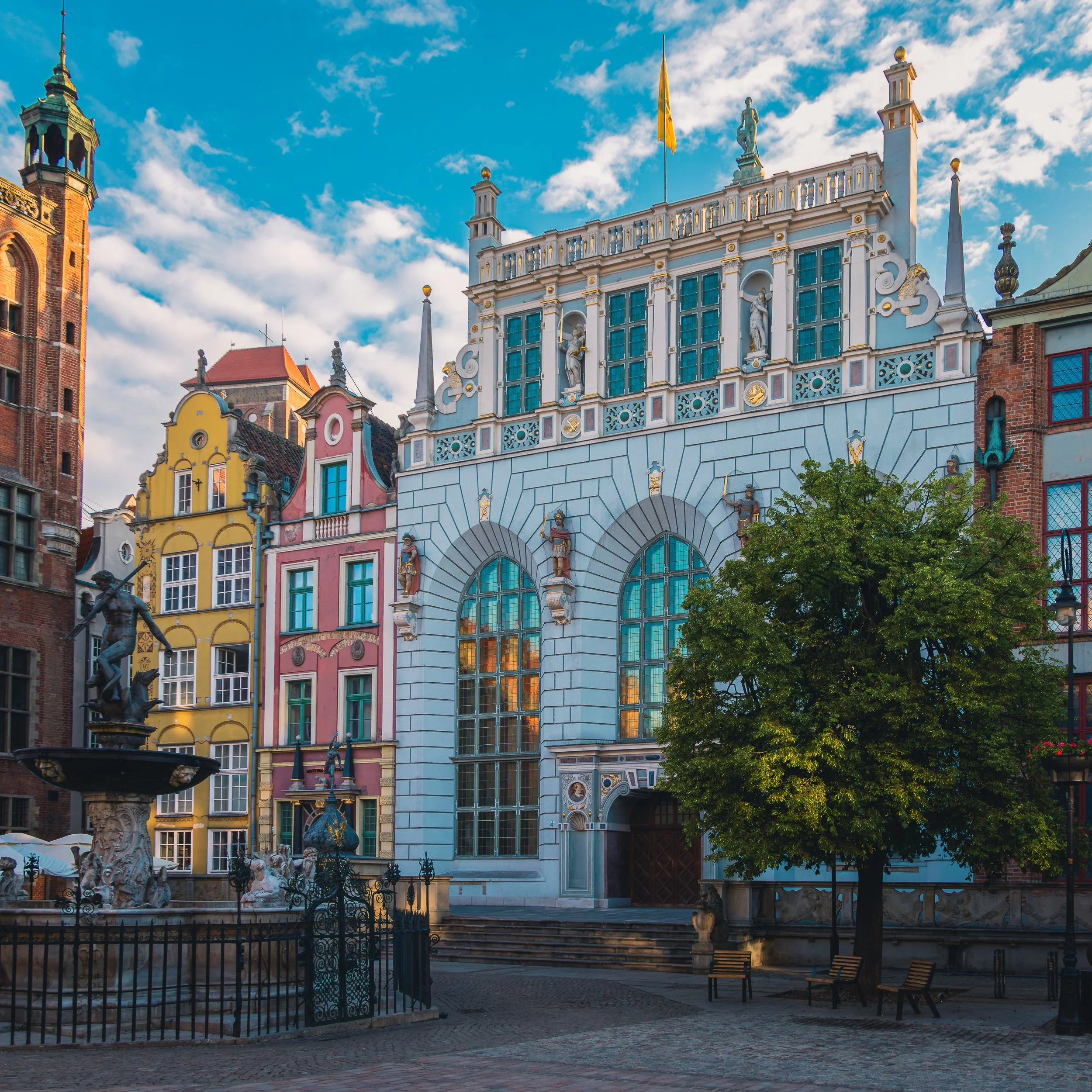
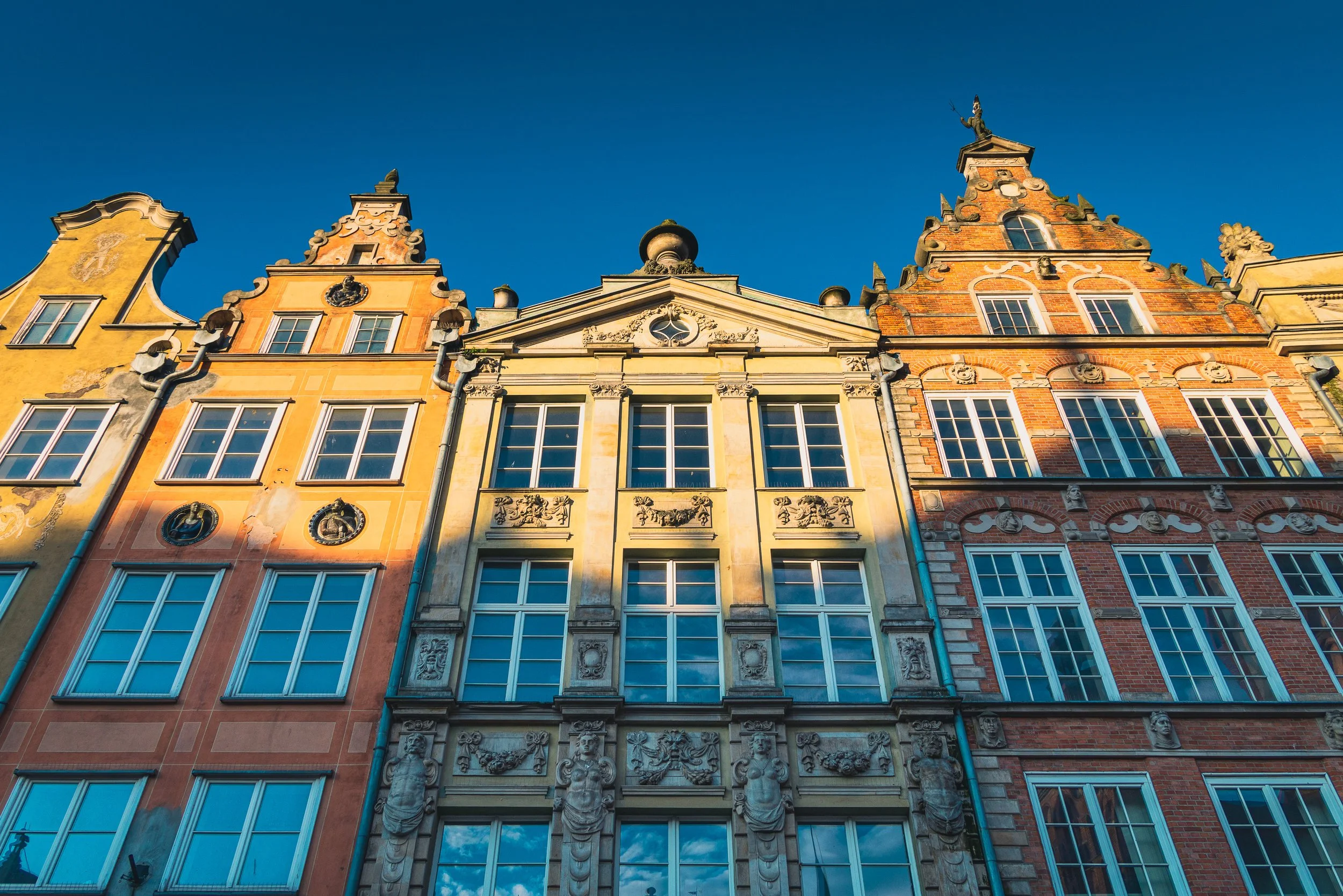
Repetition is one of those things I find very difficult to walk past. Windows, gables, columns and decorative elements already come with their own rhythm. In a sense, the architect has done part of the compositional work before I arrive. The challenge is deciding how much of it to include.
Too wide and the pattern disappears into the building. Too tight and the photograph can lose any connection to the place. Somewhere between the two is the point where the architecture stops being a record of what I saw and starts becoming a photograph in its own right.
I spend quite a lot of time looking for that point. Usually by taking three steps to the left, deciding that was wrong, and taking two of them back again.
When Lines Take Over
Sometimes the photograph becomes even simpler. A roofline crosses the sky. One facade cuts into another. A tower appears exactly where two shapes meet. These are the moments when I stop thinking very much about the building itself.
What interests me is the balance between the shapes.
Architecture is particularly good for this because it gives you fixed elements to work with. The buildings are not going anywhere. You can move, change your angle and keep adjusting the relationship between them until the composition starts to feel right.
Or until your neck starts complaining. Whichever comes first.
The City Doubled
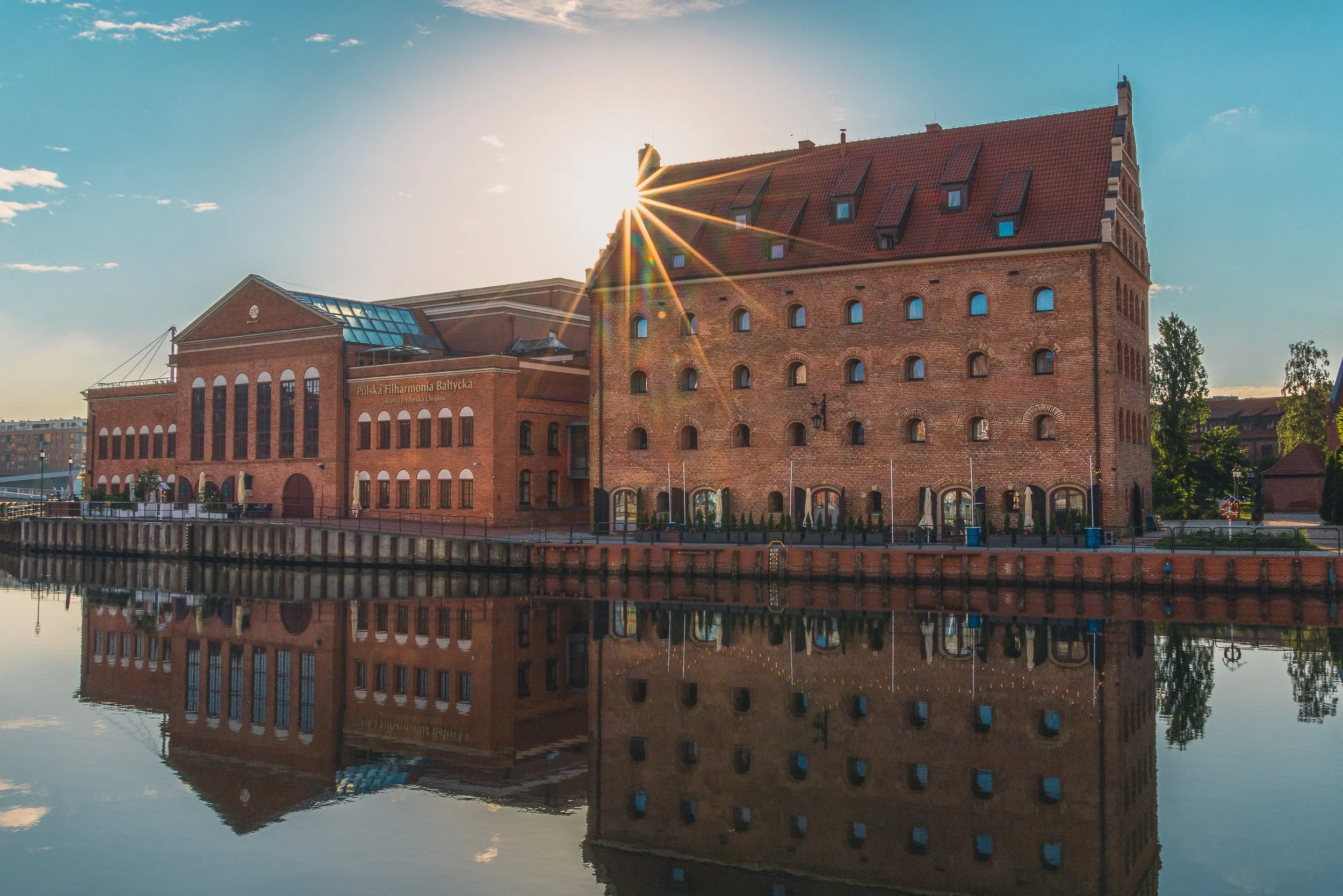
Reflections change the rules again.
Something solid suddenly becomes uncertain. Straight lines soften, buildings exist twice, and the surface of the water begins rearranging the city for you.
What I like about reflections is that they can simplify a complicated scene while making the photograph more interesting at the same time.
The architecture is still there, but it becomes part of a larger pattern of color, shape and symmetry.
And unlike a building, the reflection never quite stays still.
A little wind or a passing boat can change the entire photograph in seconds.
Between the Walls
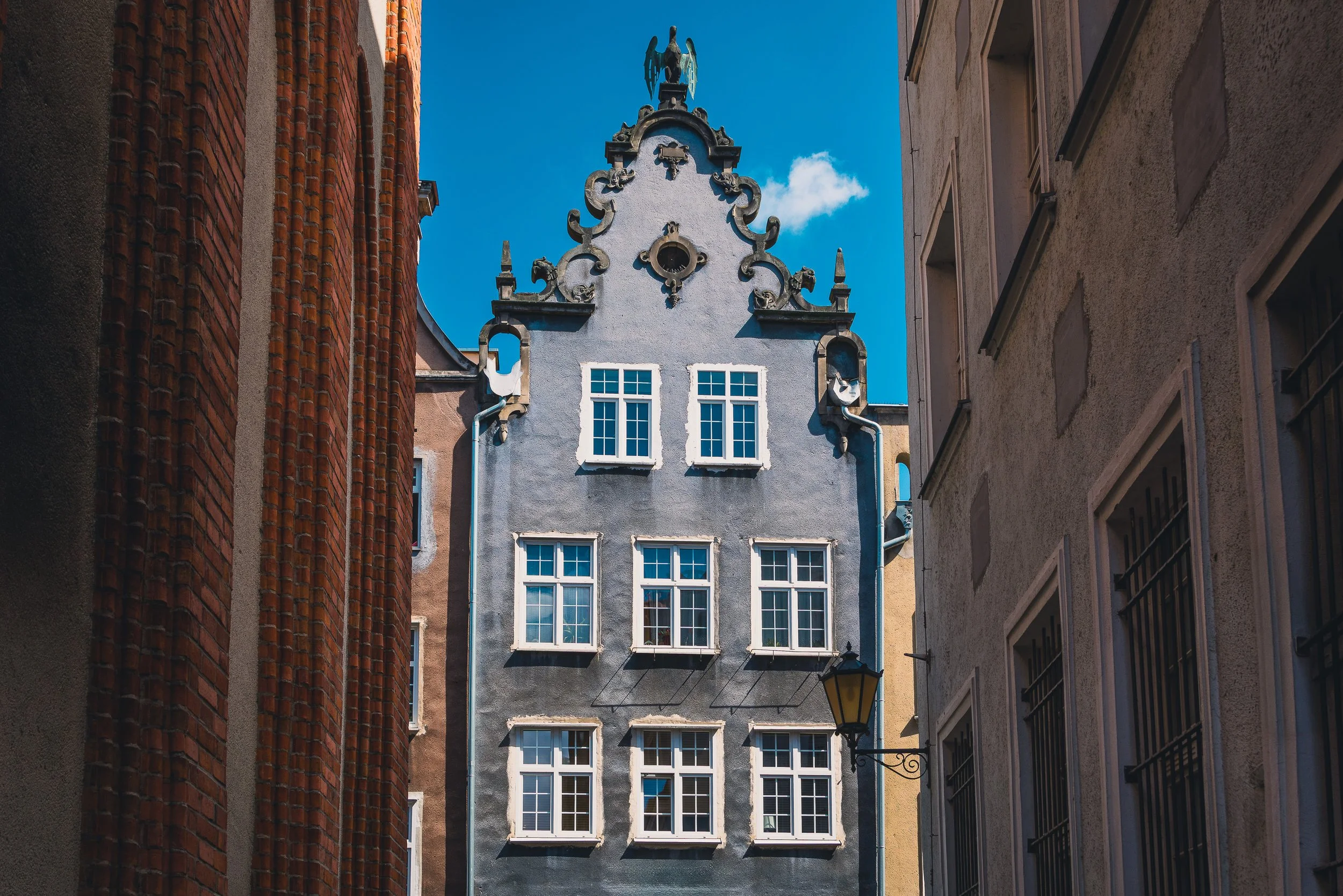
Some of my favourite architectural photographs show very little. A narrow gap between two buildings can be enough. The walls create the frame, the sky becomes negative space and suddenly the photograph is less about a street and more about the relationship between a few simple shapes.
I find these compositions particularly satisfying because they are easy to miss. There is usually a more obvious photograph nearby.
A church. A square. A beautiful facade. But sometimes the photograph I want is hiding just beside it, squeezed into a space most people would walk straight past.
One More Shape
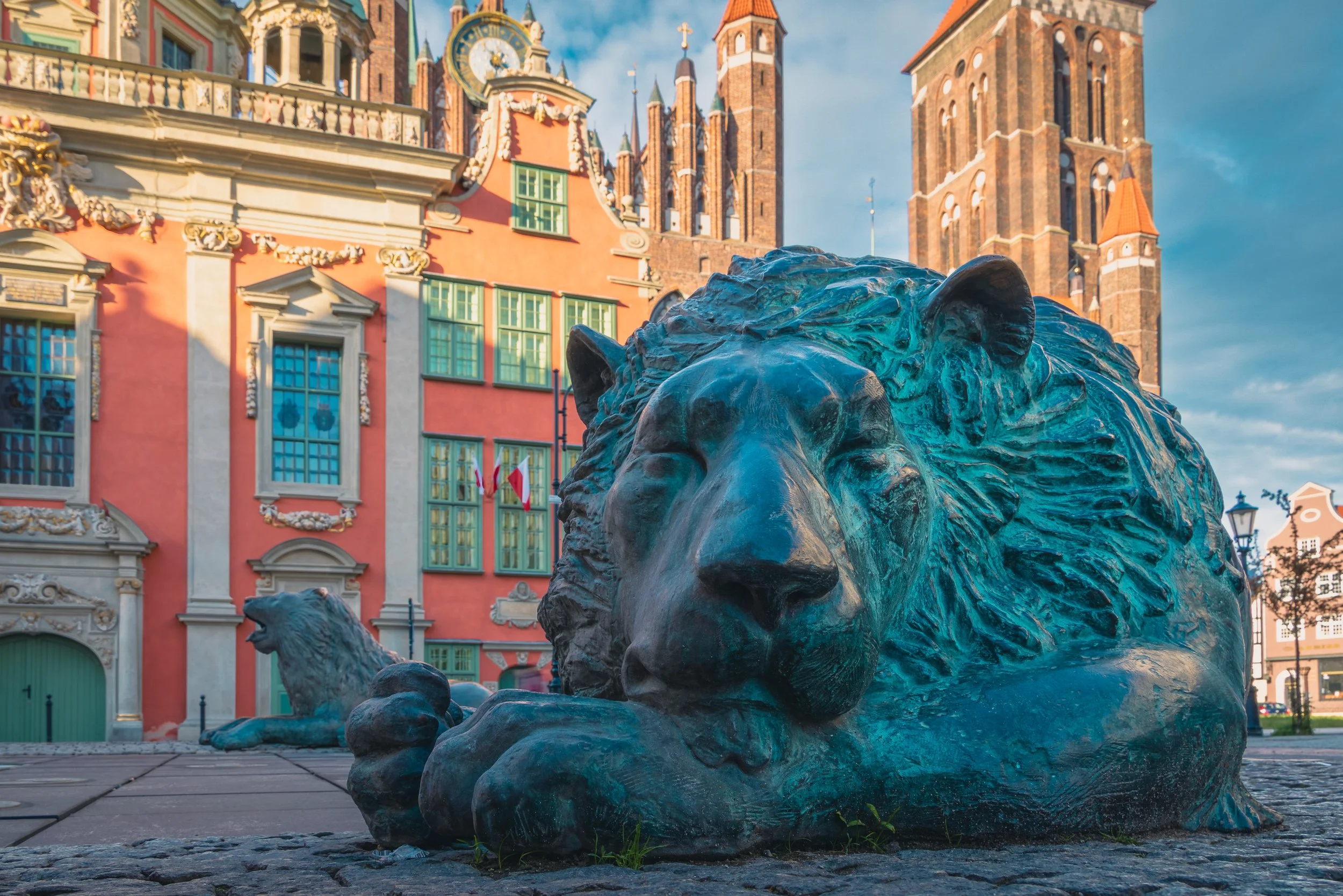
Geometry doesn't always have to come from buildings. Sometimes a sculpture, a shadow or a small detail creates the shape that holds the photograph together.
That's one of the things I enjoyed most about photographing Gdańsk. The city offers the obvious views, of course, but it also rewards looking a little closer. Once I stopped trying to photograph everything, I began noticing the patterns inside it.
The repetition. The reflections. The spaces between buildings. The small visual relationships that are easy to overlook when you're concentrating on the landmark in front of you. Gdańsk is a very photogenic city.
But for me, the interesting part began when I stopped photographing the city as a whole and started looking for the shapes inside it.