
When the photograph you planned disappears - and another takes its place.
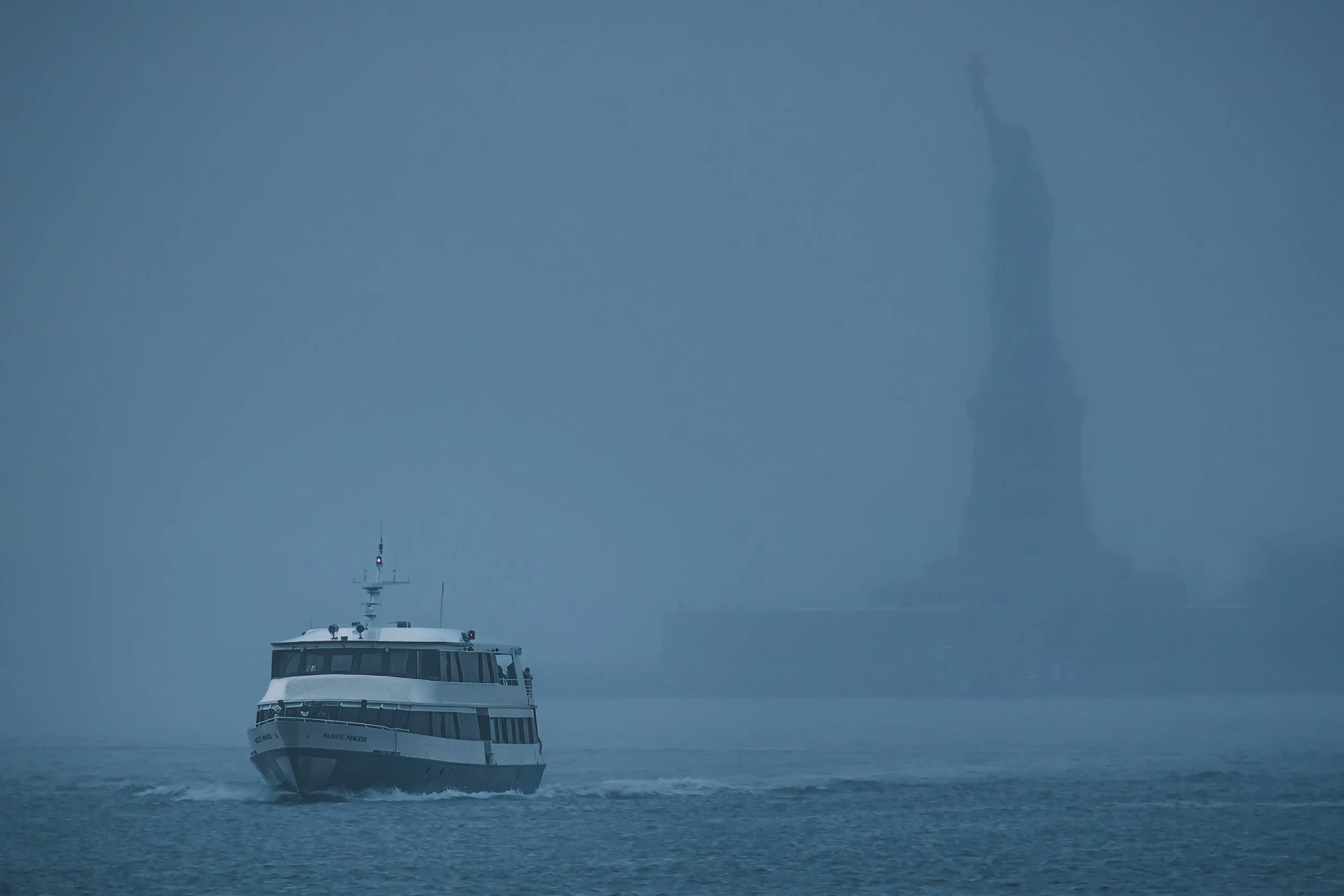
I had a very different photograph in mind. I wanted the Statue of Liberty with New York behind it — one of those views where the monument and the city clearly belong to the same place.
Instead, I got fog. Lots of it.
The skyline had almost disappeared, buildings were fading into gray, and the photograph I had imagined simply wasn't going to happen. I was genuinely disappointed.
When you travel somewhere with a particular image in your head, it can be surprisingly difficult to accept that the conditions have other ideas. And on that day, they definitely did. For a while, I kept hoping the fog would lift. It didn't.
Eventually, I stopped waiting for the photograph I wanted and started looking at the photographs the weather was actually giving me. That changed everything.
New York, Almost Gone
The frustrating part was that I knew what was behind the fog. New York was there. The skyline was there. The photograph I had imagined was probably there too.
I just couldn't see it.
And photography is rather unforgiving about that. You can't photograph the conditions you wish you had. What I could photograph was a city slowly losing its edges.
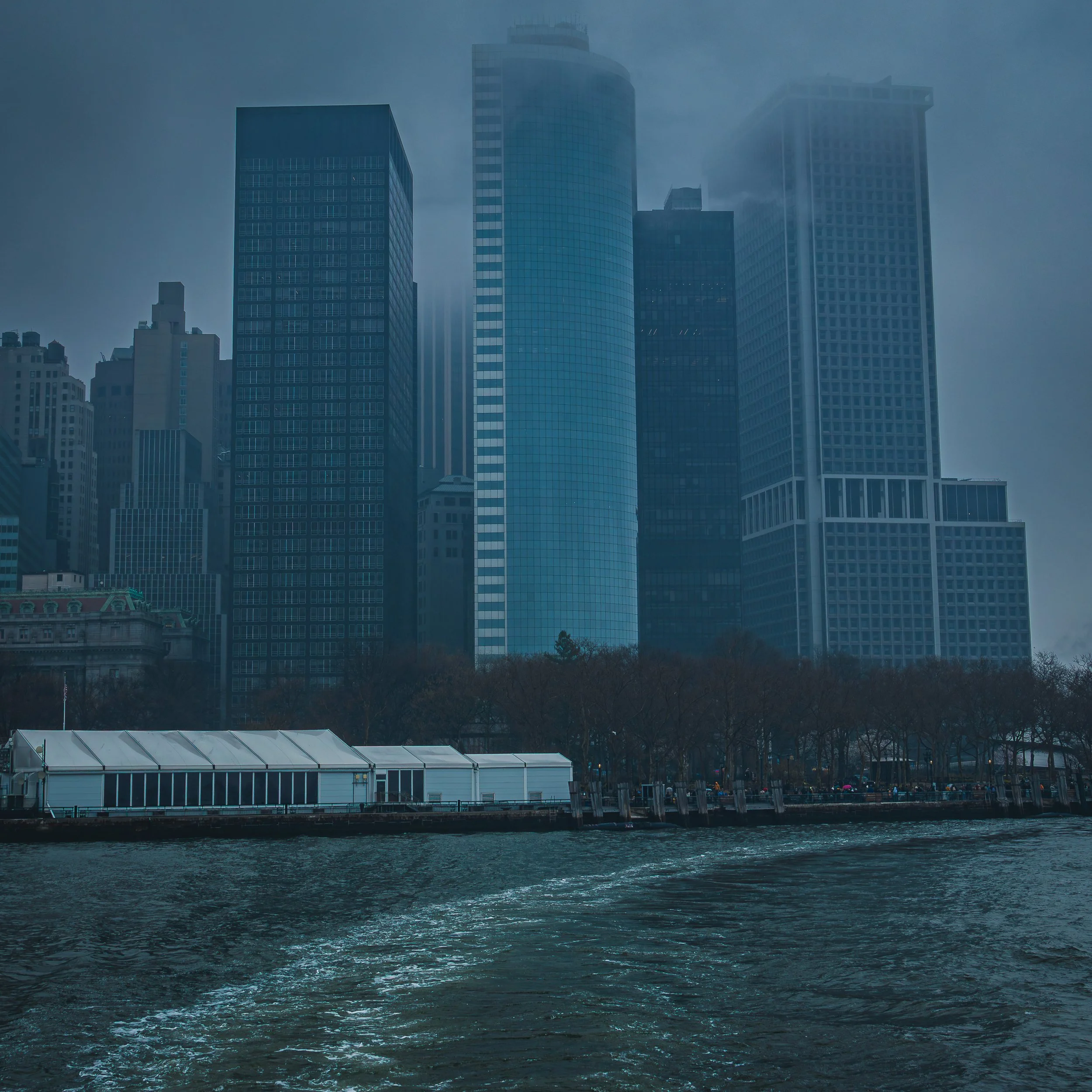
Buildings that would normally dominate the view simply stopped halfway up. Their tops disappeared into cloud and the skyline became a collection of shapes rather than a row of recognizable skyscrapers. Usually, New York gives you too much: too many buildings, too much detail, too much visual information competing for attention.
The fog did the opposite. It started taking things away. And although I didn't appreciate it immediately, photographically that was becoming much more interesting.
When the Weather Becomes the Subject
At some point, I realized I had a choice. I could spend the rest of the time being annoyed that I wasn't getting the photograph I had planned.
Or I could stop trying to make New York look the way I wanted it to look.
So I started photographing the fog instead. Once I did that, completely different things became interesting.
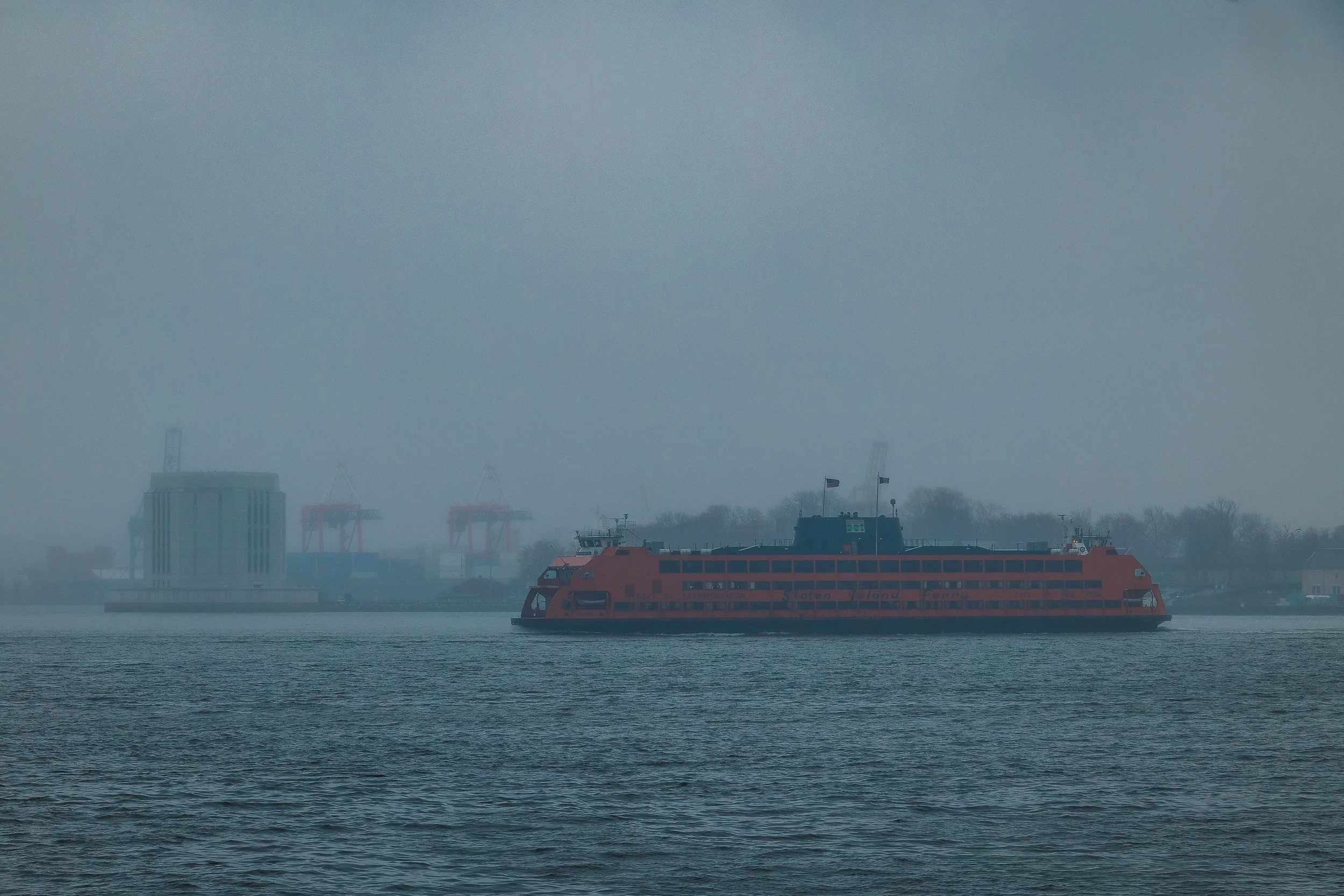
Boats appeared as silhouettes before becoming recognizable. Buildings faded into the background. Distances became difficult to judge. A scene that would normally have been about New York became much more about layers.
Water. A vessel. A vague suggestion of a city behind it.
Difficult weather has a useful habit of simplifying places without asking permission. The trick is noticing when that simplification is helping rather than fighting it.
The Familiar, Made Unfamiliar
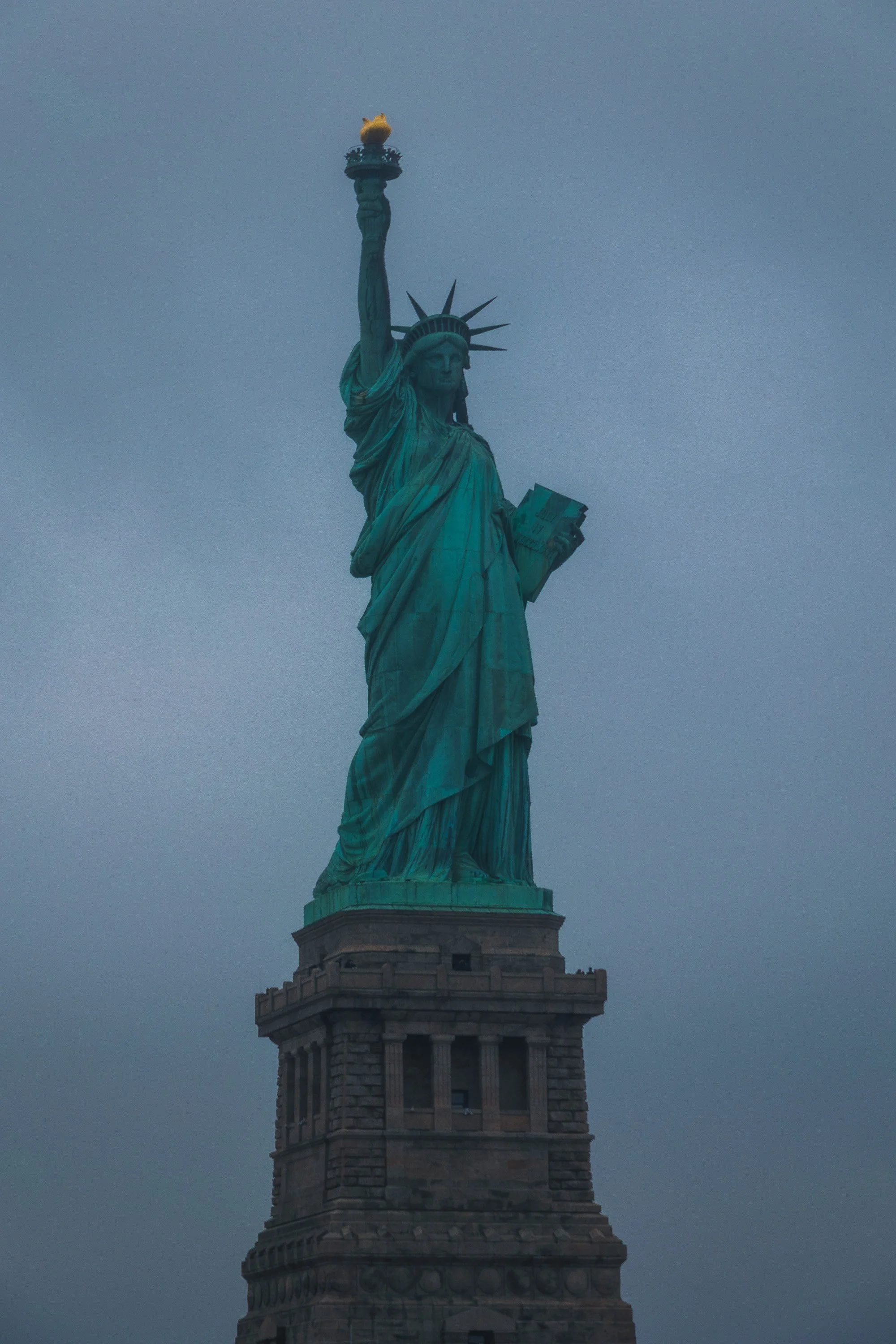
The Statue of Liberty is probably one of the least anonymous subjects you can photograph. Which makes it surprisingly difficult to photograph in a way that feels personal.
On a clear day, there is very little mystery about where you are or what you are looking at. The monument comes with an enormous amount of visual baggage. The fog stripped much of that away. The background almost disappeared. The statue was still completely recognizable, but most of the usual context had gone.
I liked that. It felt quieter. Not because New York had suddenly become quiet, of course. The photograph had. And that is usually when I become interested.
The Moment
The irony is that the photograph I had wanted all along was almost the opposite of the one I eventually made. I wanted the Statue of Liberty and New York clearly visible together. Instead, my favorite frame came when almost everything disappeared.
Then the ship moved into the scene. It emerged from the fog while the Statue of Liberty behind it seemed to disappear further into the same weather.
One was becoming clearer. The other was fading away. That relationship is what made the photograph for me.
It wasn't simply a ship passing the Statue of Liberty. It was the brief balance between those two elements. A few seconds earlier, they were in different positions. A few seconds later, the relationship would have been gone.
Photography gives you control over many things. You can choose where to stand, what lens to use and what you leave outside the frame. But eventually the world still has to cooperate. On this occasion, after thoroughly ruining my original plan, it decided to make up for it.
Why This Frame Stayed With Me
There are photographs I like because of what they show. And there are photographs I keep coming back to because of what they leave out. Out of the Fog belongs to the second group. The weather removes almost everything that would normally explain the scene. The city disappears. The background disappears. Even the Statue of Liberty is partly lost in the mist.
What remains is enough. A ship, a familiar shape behind it, water, fog — and a little uncertainty. That reduction gives the photograph the kind of atmosphere I am usually looking for. I don't need every part of a scene to explain itself. In fact, photographs often become more interesting when they don't.
From Photograph to Print
Much later, when I began selecting photographs for my first print collection, this was one of the images I kept coming back to. Not because it was the New York photograph I had planned. Quite the opposite.
It felt quieter than the city it came from. That mattered.
I wanted the Collection to contain photographs that could hold attention without shouting for it — images that reveal themselves slowly rather than explaining everything immediately. Out of the Fog fit that idea naturally.
Perhaps that is why it survived so many rounds of selection. Sometimes the photographs that stay with me are not the ones where everything went according to plan. They are the ones where the plan fell apart and something better appeared in its place.
I didn't make the photograph I had in my head. At the time, that was disappointing. Looking back, I'm glad I didn't.
The image I eventually brought home was quieter, stranger and far less obvious than the one I had planned. Sometimes the weather does half the creative work for you.
The useful part is noticing when it does.